
Codema team visit Ostend in Belgium for the RODEO project
RODEO partners discussed stakeholder engagement and financial architecture over three days.
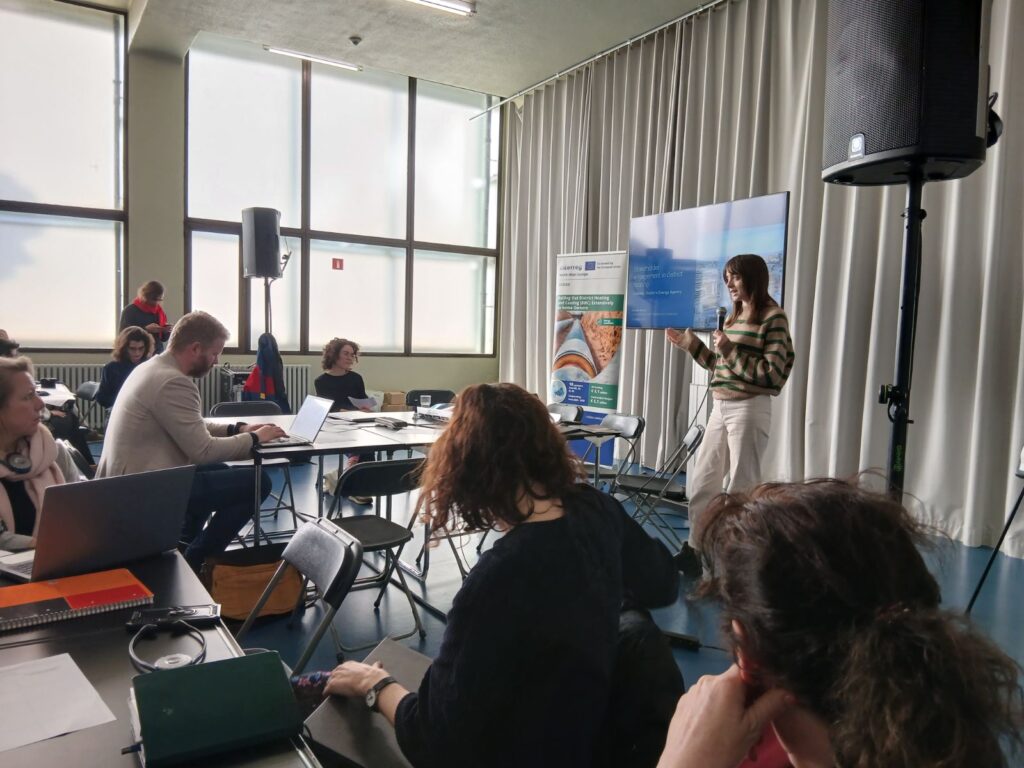
Members of the District Heating and Public and Stakeholder Engagement teams in Codema along with South Dublin County Council travelled to Ostend in Belgium at the end of November to join a consortium meeting for the RODEO project.
RODEO – Rolling Out DHC Extensively to Home Owners – is an Interreg NWE project aiming to expand district heating and cooling (DHC) networks to include the residential sector. The Dublin pilot focuses on the Tallaght District Heat Scheme which is providing heat to residential customers living in cost-rental apartments in Tallaght for the first time this year.
Over three days in Ostend, the RODEO partners explored stakeholder engagement strategies and financial architecture for district heating projects and the visit included a tour of the Biostoom Oostende waste-to-energy plant which will soon be providing waste heat to the Ostend district heating system.
Stakeholder engagement
Engaging stakeholders was a key focus of November’s meeting, with a dedicated stakeholder engagement workshop to support partners in developing engagement strategies on the first day.
Each city presented their own approach and challenges surrounding stakeholder engagement. Hannah Byrne, Codema’s Communications and Engagement Coordinator, shared Codema’s recent work in developing guidance for effective stakeholder engagement in district heating feasibility studies, stakeholder communication plans and tailored summary brochures.
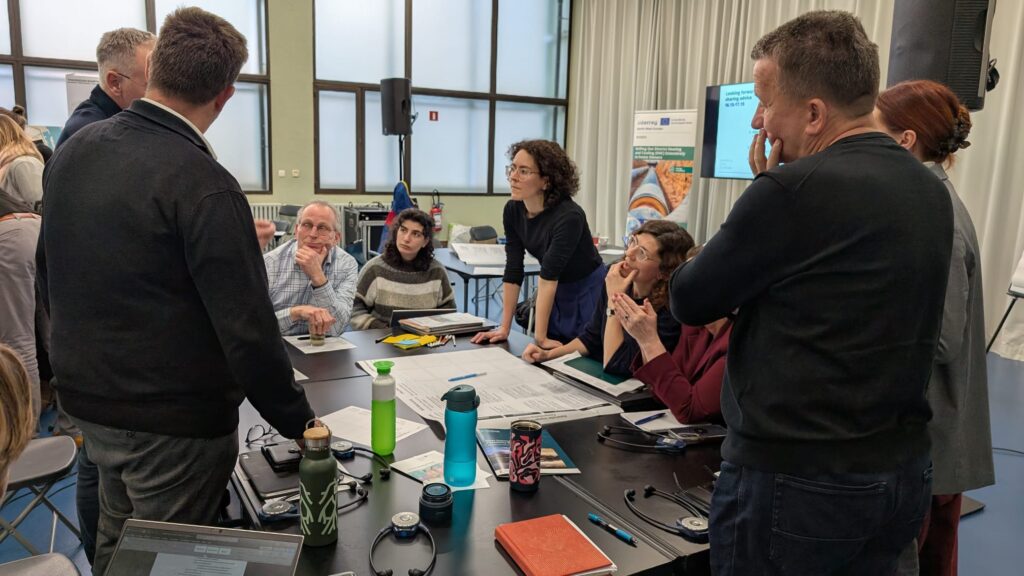
The first day also included a public evening event bringing together residents of Ostend to learn more about the plans for the expansion of district heating in the area, gather input on future plans and hear from speakers including KetelhuisWG, an energy cooperative from Amsterdam bringing a district heating network to their neighbourhood.
Partners also heard presentations on day two from the City of Rotterdam on their social marketing approach to community engagement and Hanze, University of Applied Sciences, on the social fingerprint method they employ to gain a better understanding of a community.
Financial architecture
The second day started with a workshop on financial architecture, exploring each pilots’ contexts, the similarities and differences between cities and how to develop fair prices for end users while covering real costs and investments.
It was stated that transparent and evidence-based costs should be included in the assessment of the long term viability of the district heating system. Additionally, stable and predictable charges for households are of particular importance. An insight for the technical and financial modelling shown from the perspective of Owner/Operator and Policy/Regulation was clearly provided by Exceedence Ltd.

On the final day, Fionn Regan from University College Cork presented on Energy Systems Readiness and facilitated a workshop on stages in the innovation journey.
The Ostend visit was a great opportunity to meet with project partners, exchange ideas and share challenges and solutions. Dedicated workshops on stakeholder engagement and financial architecture helped to drive the project forward, and we are looking forward to continuing our work on this project in 2026.
About RODEO
RODEO aims to introduce a more participative business model that rebalances the costs, benefits and risks of developing district heating and cooling (DHC). RODEO aims to introduce a more participative business model that rebalances the costs, benefits and risks of developing DHC. The model will be validated in four pilot cities that are developing their own DHC systems.
RODEO